
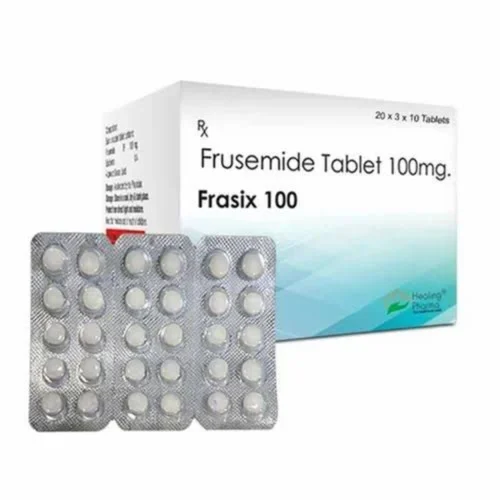
Description
Lasix 100 mg
Lasix 100 mg contains Furosemide 100 mg, a loop diuretic (“water pill”) used to help the body remove excess salt and water through the urine. It is commonly prescribed for edema (fluid retention) associated with conditions such as heart failure, liver disease, or kidney disorders, and may also be used in certain cases of hypertension.
Furosemide works primarily in the kidneys by reducing the reabsorption of sodium and chloride, which increases urine production and helps reduce excess fluid in the body. Lasix 100 mg should be taken only as prescribed by a qualified healthcare professional.
Product Information
| Product Name | Lasix 100 mg |
|---|---|
| Generic Name | Furosemide |
| Strength | 100 mg |
| Drug Class | Loop Diuretic |
| Therapeutic Use | Edema / Fluid Retention / Hypertension |
| Dosage Form | Tablet |
| Route of Administration | Oral |
| Prescription Status | Prescription Medicine |
Uses of Lasix 100 mg
Lasix 100 mg may be prescribed for:
- Edema (fluid retention)
- Fluid accumulation associated with congestive heart failure
- Edema related to certain kidney disorders
- Edema associated with liver disease
- Hypertension, in selected patients and treatment plans
- Other conditions requiring increased removal of excess fluid, as determined by a doctor
How Lasix 100 mg Works
Lasix 100 mg contains furosemide, which acts on the thick ascending limb of the loop of Henle in the kidneys. It inhibits the sodium-potassium-chloride (Na-K-2Cl) cotransporter, reducing the reabsorption of sodium and chloride.
As a result, more sodium, chloride, and water are eliminated through urine. This helps reduce excess fluid and swelling and can lower blood pressure in appropriate patients.
Benefits of Lasix 100 mg
- Helps remove excess fluid from the body
- Reduces swelling caused by fluid retention
- Can help relieve fluid-related symptoms associated with heart failure and certain kidney or liver conditions
- May help lower blood pressure when prescribed for hypertension
- Has a rapid and potent diuretic effect
Directions for Use
Take Lasix 100 mg exactly as prescribed by your doctor.
Because furosemide increases urine production, it is commonly taken in the morning. If more than one dose is prescribed, your doctor may recommend taking the later dose earlier in the day to reduce nighttime urination.
Do not change the dose or stop treatment without medical advice. Drink fluids according to your doctor’s recommendations, particularly if you are being treated for significant fluid retention or heart failure.
Possible Side Effects
Common side effects may include:
- Increased urination
- Dizziness
- Headache
- Dehydration
- Low blood pressure
- Muscle cramps
- Changes in electrolyte levels
- Increased thirst
More serious problems can occur if too much fluid or electrolytes are lost. Seek medical attention if you experience severe weakness, confusion, fainting, significant dehydration, irregular heartbeat, or other concerning symptoms.
Precautions
Tell your doctor if you have kidney disease, liver disease, low blood pressure, electrolyte abnormalities, gout, diabetes, or difficulty passing urine.
Furosemide can cause loss of electrolytes such as potassium, sodium, magnesium, and calcium. Your doctor may recommend periodic blood tests to monitor kidney function and electrolyte levels.
Lasix can interact with several medicines, including certain blood-pressure medicines, lithium, NSAIDs, and other diuretics. Tell your doctor about all medicines and supplements you take.
Frequently Asked Questions
What is Lasix 100 mg used for?
Lasix 100 mg is primarily used to treat edema or fluid retention associated with conditions such as heart failure, certain kidney disorders, and liver disease. It may also be used for hypertension in selected patients.
What is the generic name of Lasix 100 mg?
The active ingredient in Lasix 100 mg is furosemide 100 mg.
Why does Lasix 100 mg make me urinate more?
Lasix is a loop diuretic that increases the amount of sodium and water removed by the kidneys. This produces more urine and helps reduce excess fluid in the body.
When should Lasix 100 mg be taken?
It is often taken in the morning because it increases urination. Follow the exact schedule provided by your doctor.
Can Lasix 100 mg cause low potassium?
Yes. Furosemide can increase potassium loss through the urine. Your doctor may monitor your potassium and other electrolyte levels during treatment.
Can I stop taking Lasix 100 mg when the swelling improves?
Do not stop Lasix without consulting your doctor. The underlying condition may still require treatment even when symptoms improve.
Can Lasix 100 mg cause dehydration?
Yes. Because it increases urine production, excessive fluid loss can cause dehydration, dizziness, or low blood pressure. Follow your healthcare professional’s fluid recommendations.
Is Lasix 100 mg a prescription medicine?
Yes. Lasix 100 mg should be used under the supervision of a qualified healthcare professional.





Reviews
There are no reviews yet.